
Journal
Damascus Steel Knives: What They Are, Why They Matter, and How to Choose One
May
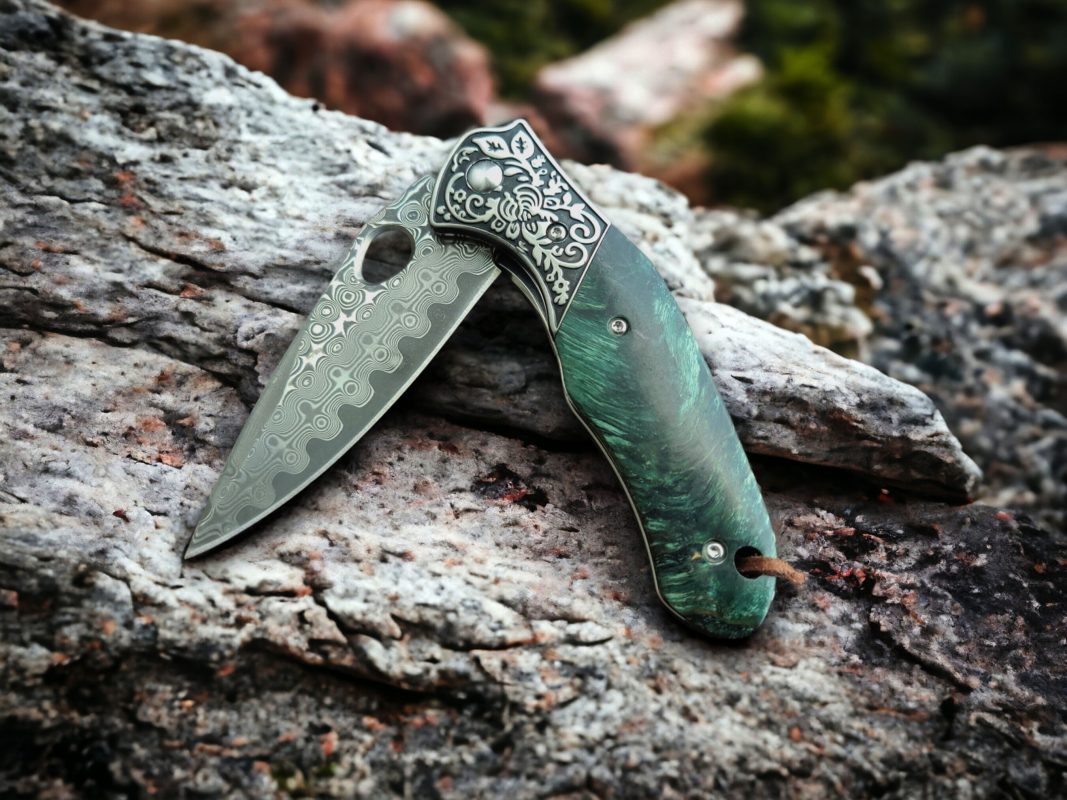
Damascus steel is one of the most distinctive blade materials in the world. The swirling, wavy patterns on the surface are not painted or etched — they are the result of folding and forge-welding multiple layers of steel together, then acid-etching the finished blade to reveal the grain. No two Damascus blades look the same.
At Fair Impex, every Damascus knife is hand-forged by skilled craftspeople with a VG10 high-carbon steel core for superior edge retention, wrapped in layered Damascus for strength and beauty. This guide covers what Damascus steel is, why it matters, and how to choose the right knife.
What Is Damascus Steel?
Damascus steel gets its name from the city of Damascus, Syria — historically a major trading hub where these distinctive patterned blades were sold. True Damascus steel is made by forge-welding two or more types of steel together, folding the billet repeatedly, then drawing it out into a blade. The folding process creates alternating layers of high-carbon and low-carbon steel that, when acid-etched, reveal the characteristic flowing pattern on the surface.
Modern Damascus steel is sometimes called pattern-welded steel to distinguish it from the original wootz Damascus of ancient Persia — but the folded, layered construction and the distinctive surface pattern are the same principle.
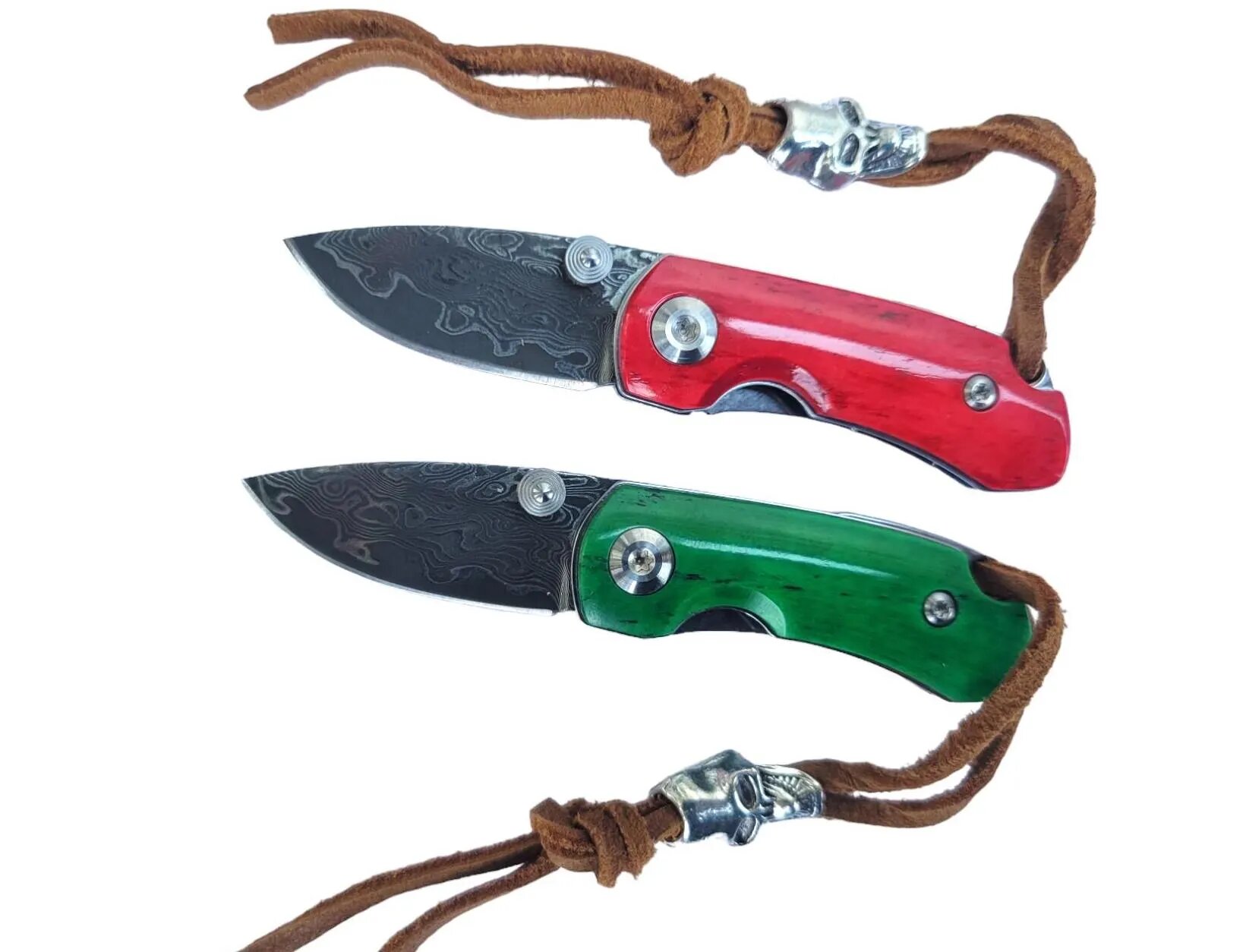
The number of layers varies: 67, 72, 107, and more. More layers creates a finer, more complex pattern. The core steel — typically VG10 — determines the cutting performance.
Why VG10 Core Matters
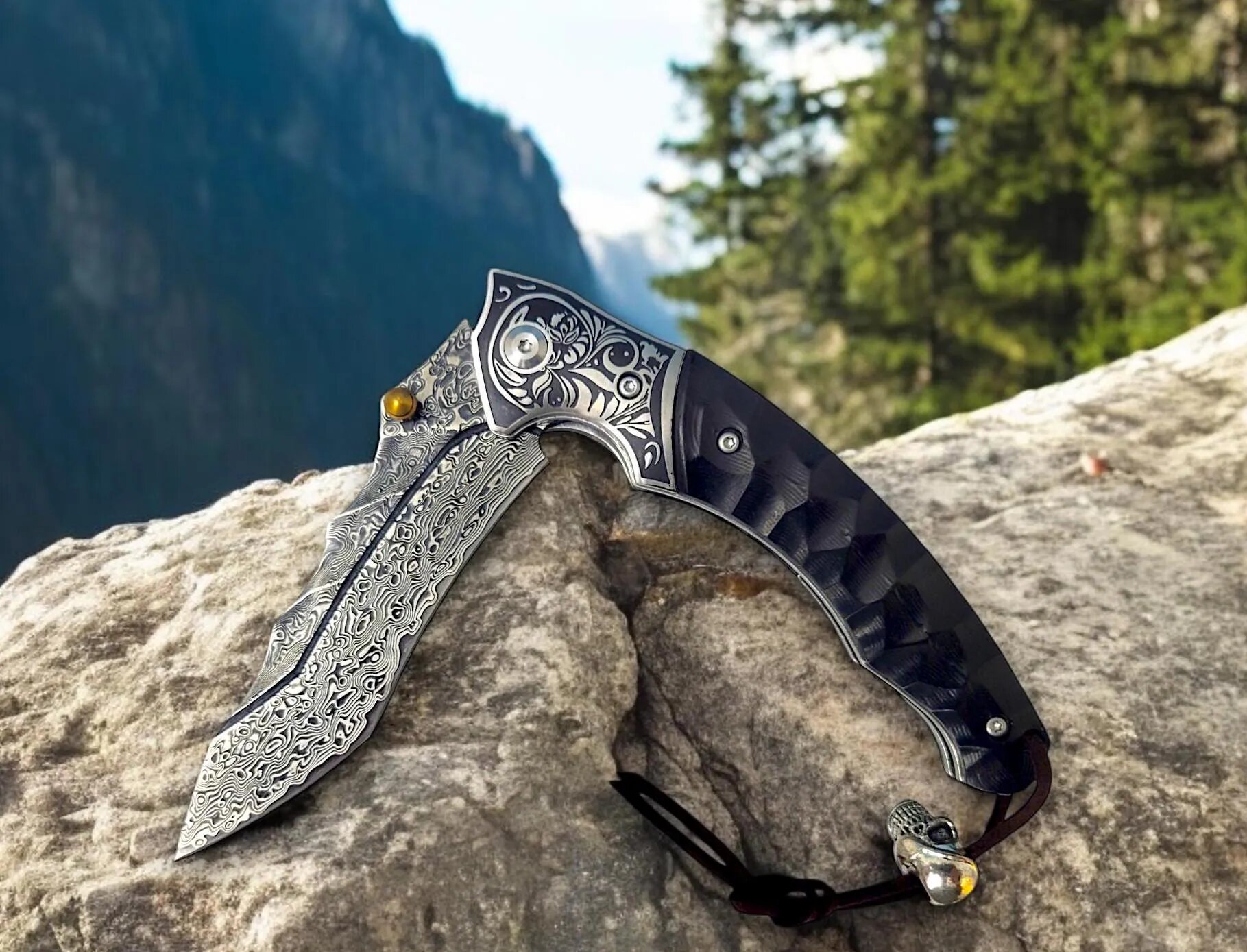
VG10 is a premium Japanese stainless steel with high carbon content (approximately 1% carbon) and added vanadium and cobalt for hardness and corrosion resistance. It holds an edge exceptionally well — better than most everyday steels — and is used in professional chef’s knives and premium EDC blades.
When VG10 is used as the core of a Damascus blade, you get the best of both: the striking visual pattern of Damascus on the outside, and the superior cutting performance of VG10 at the edge.
Our Damascus Knife Collection
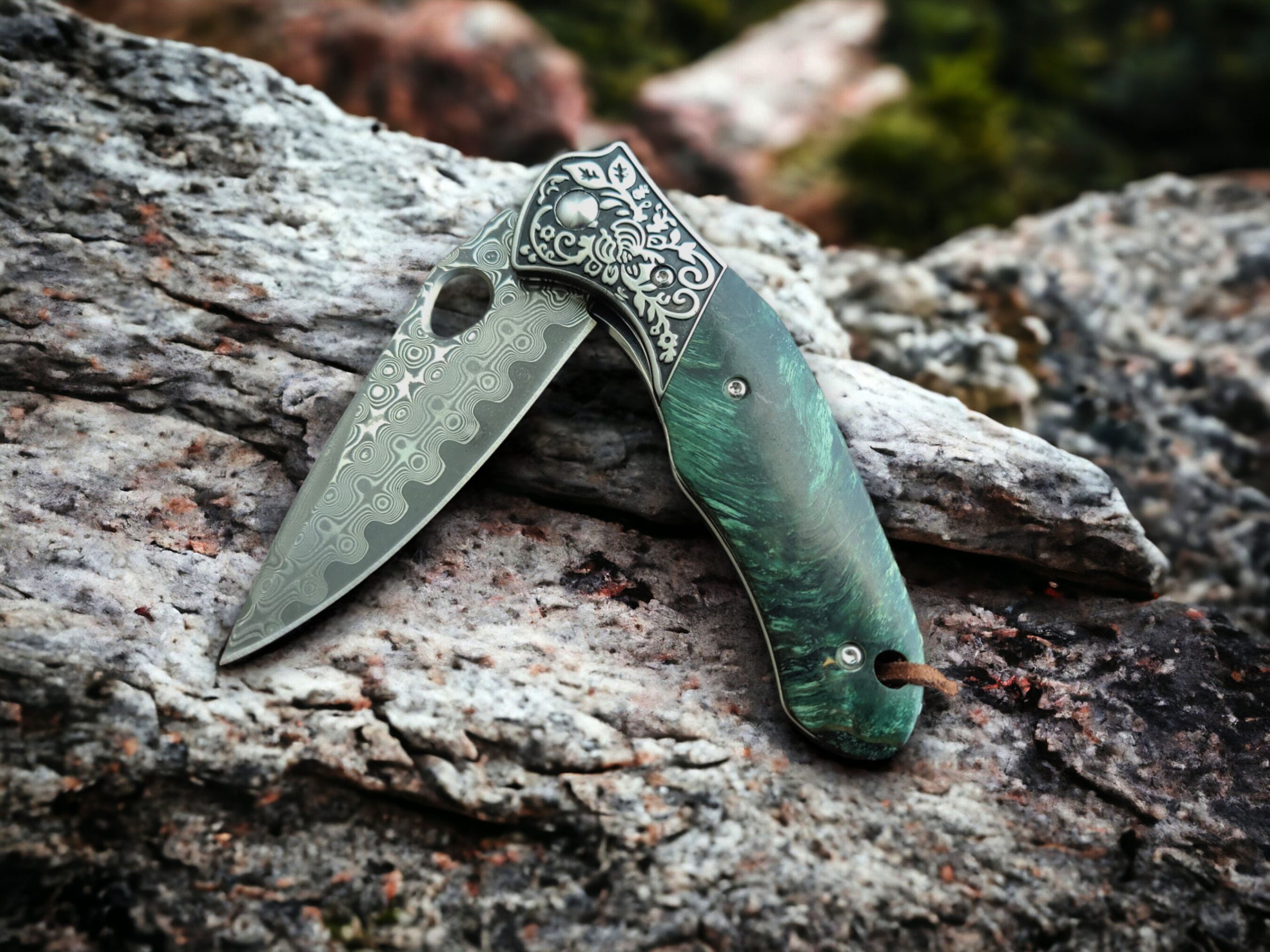
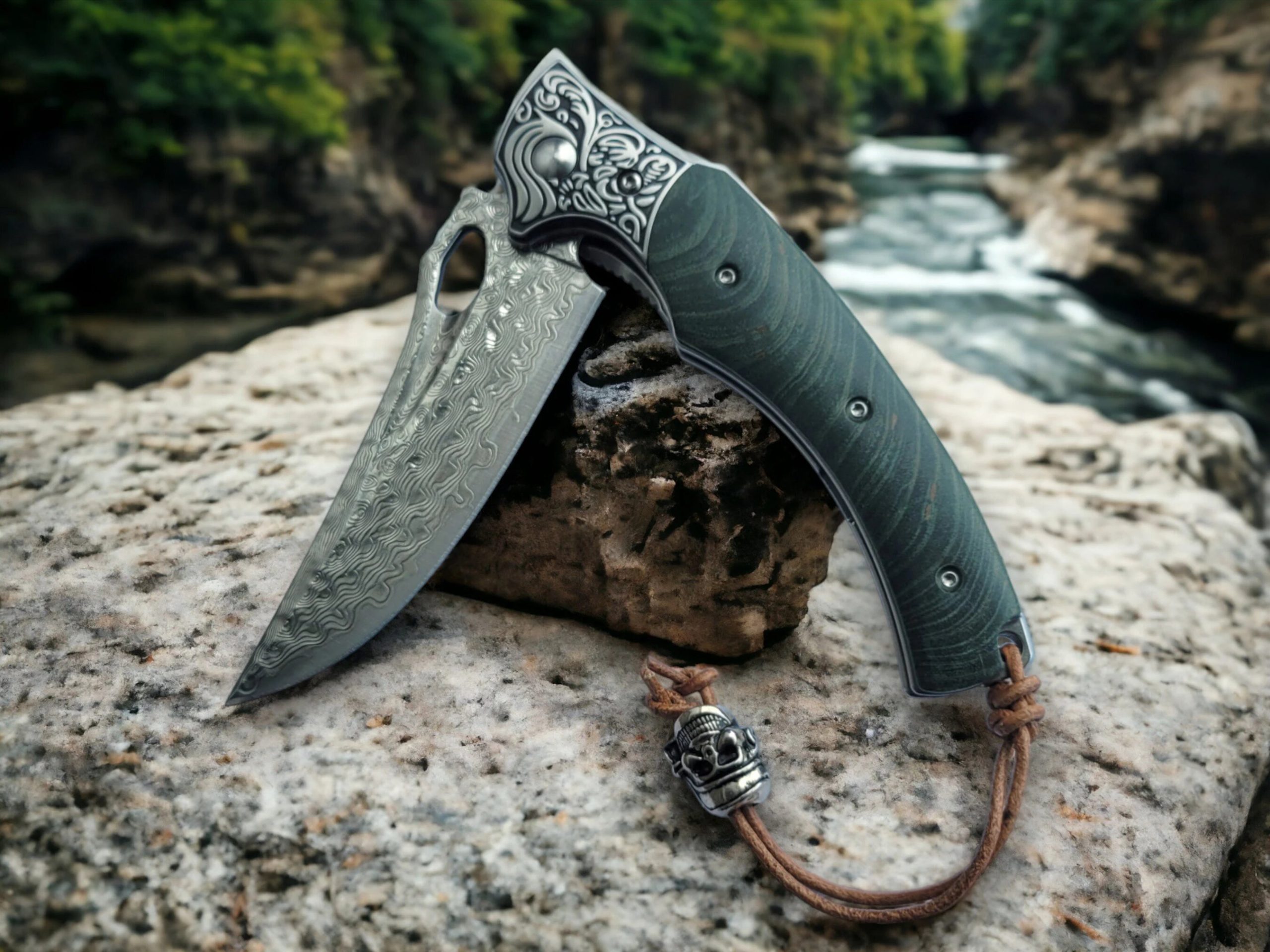
Every Fair Impex Damascus knife is handmade — no two are identical. Each blade has its own unique pattern, shaped by the forge and the craftsman’s hand. Available in multiple handle materials, layer counts, and blade styles.
Handle Materials — What to Choose
The handle material affects how the knife feels in hand, its weight, and its appearance. Here’s what we offer:

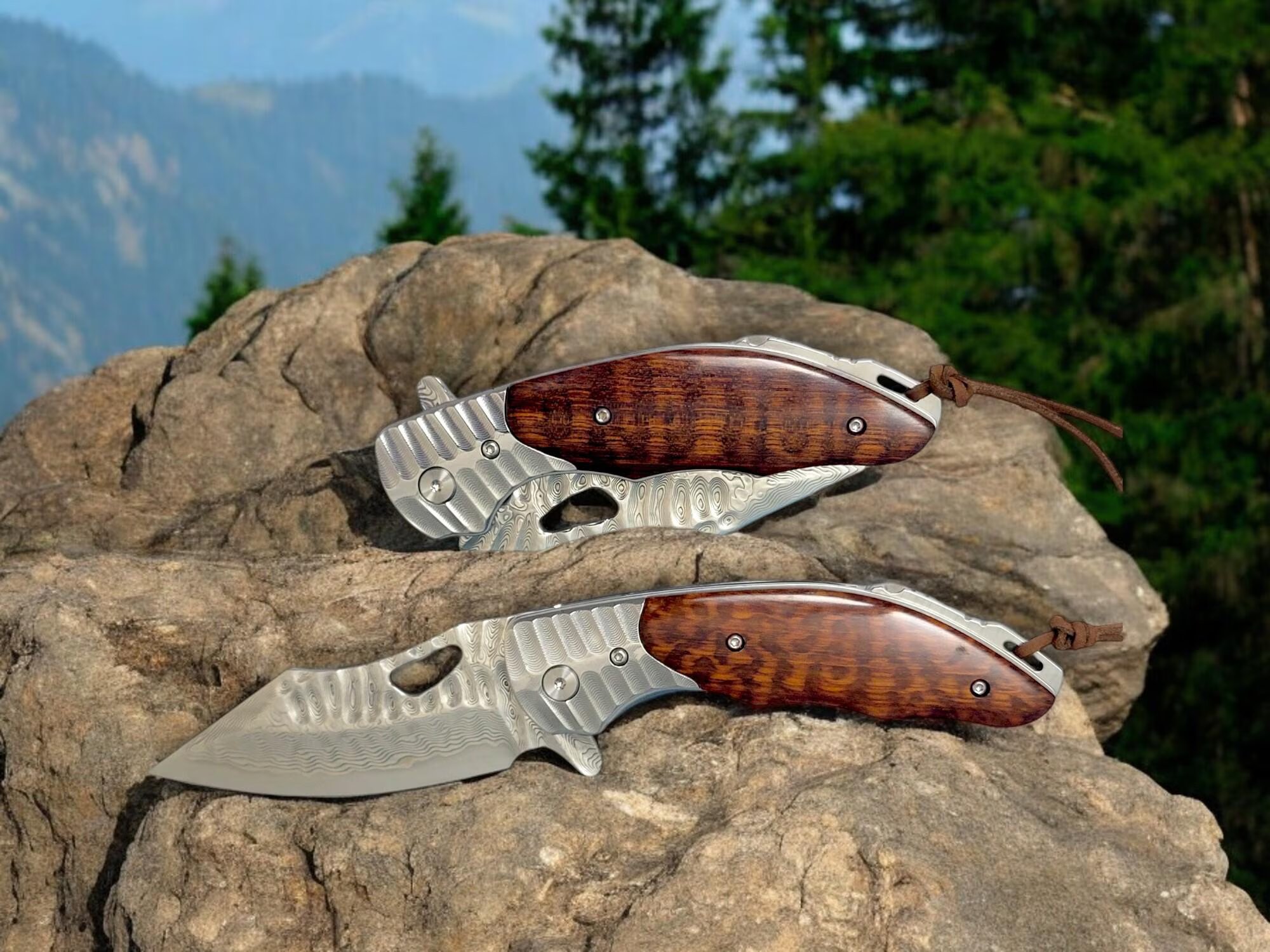
Rosewood
Rosewood is one of the most popular handle materials for folding knives. It has a rich reddish-brown grain, natural oils that resist moisture, and a warm weight in the hand. It looks more refined than synthetic handles and improves with age and handling.
Abalone Shell
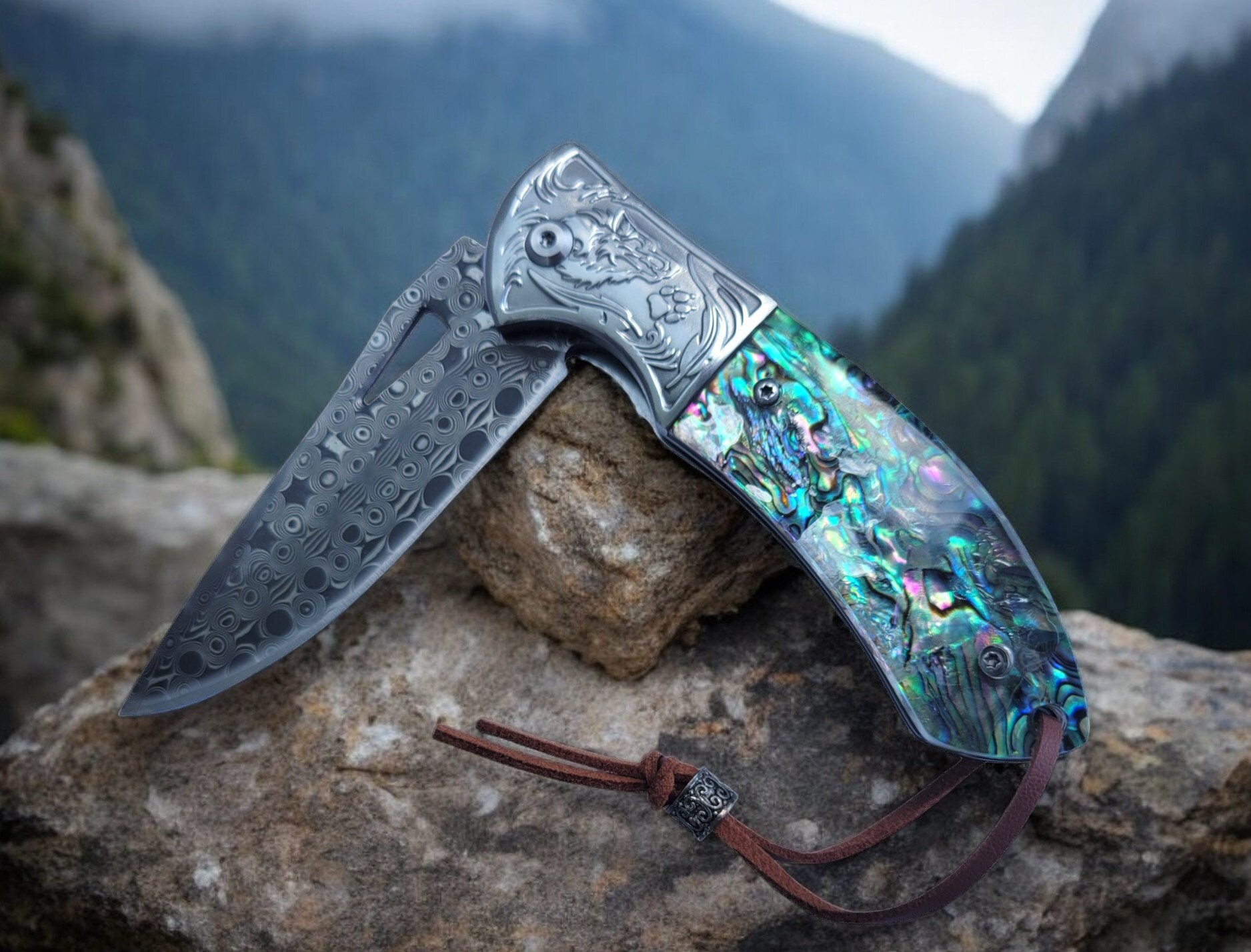
Abalone shell handles are the most visually striking option — the iridescent nacre surface shifts color in the light, displaying blues, greens, purples, and silvers depending on the angle. Combined with a Damascus blade, the result is a knife that looks like a work of art. Popular as a collector piece and gift.
Ox Bone with Brass Accents
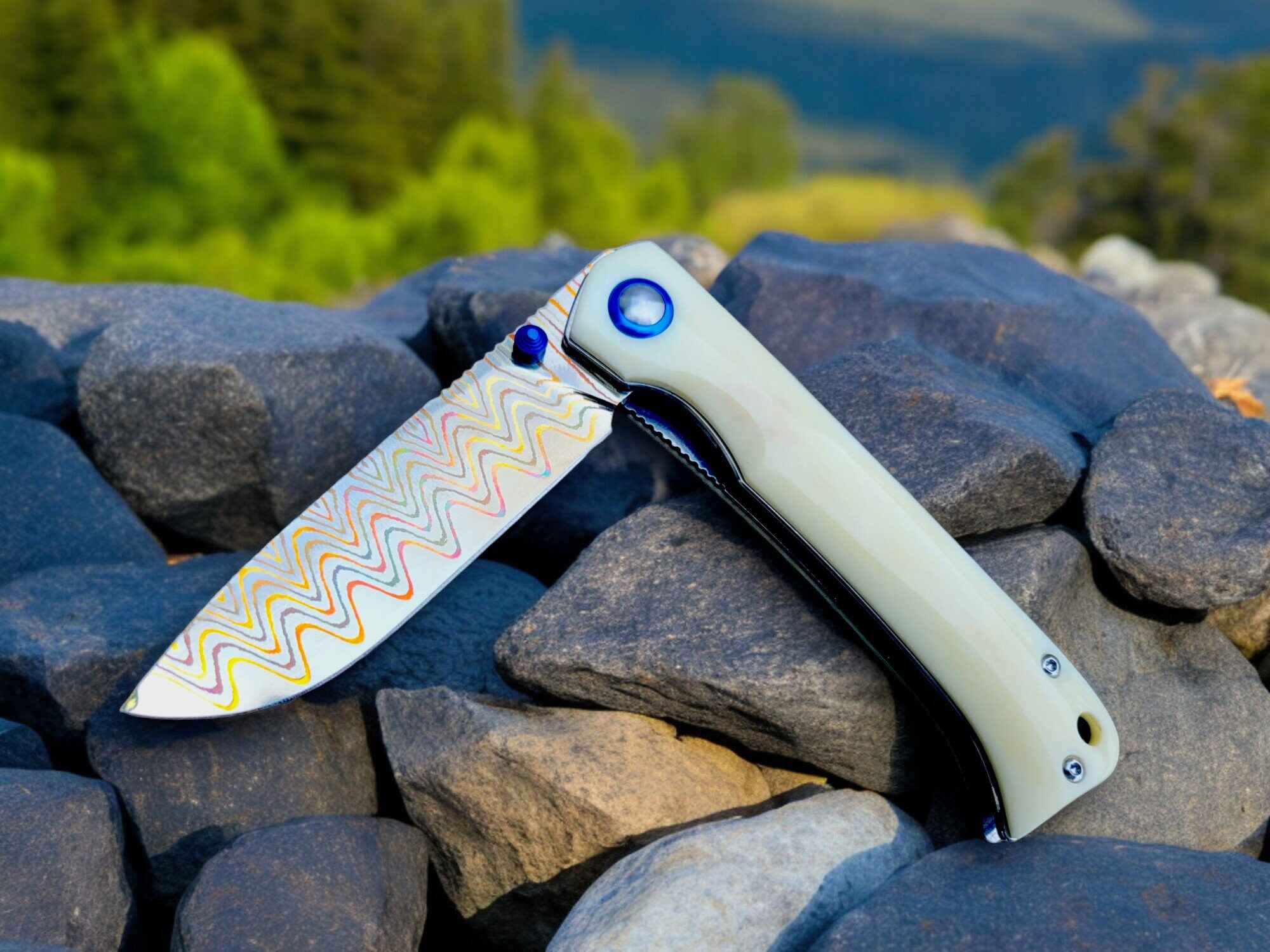
Ox bone handles have a natural ivory-cream color with subtle grain variation. Combined with brass bolsters and Damascus steel, the combination has a vintage, heirloom quality. Each piece ages differently — the bone develops a slight patina over time, making your knife uniquely yours.
How to Care for a Damascus Steel Knife
Damascus steel, particularly the high-carbon layers, requires slightly more care than a standard stainless steel blade:
- Keep it dry — wipe the blade dry after use. High-carbon steel can develop surface rust if left wet.
- Oil occasionally — a light coat of food-safe mineral oil or camellia oil on the blade prevents oxidation and keeps the Damascus pattern looking its best.
- Hone regularly — use a leather strop or fine ceramic rod to maintain the edge between sharpenings.
- Sharpen on a whetstone — for a full resharpening, use a whetstone at 15–20 degrees per side. VG10 responds best to fine-grit stones.
- Store properly — store the knife open or in a breathable sheath. Avoid damp closed cases.
- Avoid the dishwasher — heat, moisture, and detergent will damage both the Damascus pattern and the handle material.
Damascus Knives as Gifts
A Damascus knife is one of the most distinctive gifts you can give. The combination of hand-forged craftsmanship, unique patterning, and premium cutting performance puts it in a category that mass-produced knives simply cannot reach. Popular occasions:
- Father’s Day — the gift that gets used and appreciated daily
- Birthdays for hunters, outdoorsmen, and knife collectors
- Groomsmen gifts — something genuinely memorable
- Retirement gifts — a lasting piece for someone who appreciates quality
- Christmas — for anyone who values handcrafted things
Because every Damascus blade is unique, the recipient gets something that genuinely belongs only to them — not a mass-produced item someone else also owns.
Frequently Asked Questions
Is Damascus steel stronger than regular steel?
The multi-layer construction gives Damascus excellent toughness — the softer layers absorb shock while the harder layers hold an edge. With a VG10 core, the cutting performance rivals or exceeds most production knives.
Will Damascus rust?
The high-carbon layers are susceptible to surface rust if left wet. The VG10 core and stainless layers resist corrosion well. With basic care (keeping it dry, oiling occasionally), Damascus stays in excellent condition for decades.
Are more layers better?
More layers create a finer, more complex visual pattern. The practical difference in strength is minimal beyond a certain point — pattern complexity is the main benefit. Our knives range from 67 to 107+ layers.
How do I tell real Damascus from fake?
Real Damascus has a pattern that runs through the full thickness of the blade — you can see it on the spine and ricasso, not just the flat. Acid-etching reveals the grain. Printed or laser-etched fake Damascus only has pattern on the surface.
Browse our full collection of handmade Damascus steel folding knives.
Every blade is unique. Every knife ships free.
Further Reading
- What Is Damascus Steel? History, Layers & How It Is Made — a deeper dive into the forging process, layer counts, and VG10 core steel.
- How to Care for a Damascus Steel Knife — cleaning, oiling, sharpening, and long-term storage guide.
Browse the full Damascus Steel Knives collection at Fair Impex — handmade VG10 core blades in rosewood, abalone, ox bone, and ebony. Free US shipping on every order.
