
Journal
Full Grain vs Genuine Leather Belt: What Is the Difference?
May
Walk into any leather goods store and you will see belts labelled “genuine leather”, “top grain leather”, “full grain leather”, and occasionally “bonded leather”. These terms are not just marketing language — they describe fundamentally different materials with very different quality, durability, and aging characteristics. This guide explains what each term means and why it matters before you buy.
How Leather Is Graded
A hide has layers. The outermost layer — the grain surface — is the densest, most durable, and most resistant to moisture. As you move deeper into the hide, the fibres become looser and weaker. Leather grades are defined by which part of the hide they come from and how much the surface has been processed.
Full Grain Leather
Full grain leather uses the entire outer layer of the hide, with the natural grain surface left completely intact. No sanding, no buffing, no correcting of natural marks or variations. The surface you see is the surface of the animal’s skin, exactly as it was.
This is the highest grade of leather. The intact grain means the leather retains all of its natural density and tensile strength. It resists moisture better than any other grade. And crucially, it develops a patina over time — the surface darkens and enriches with use, becoming more attractive the longer you wear it.
Full grain leather is the only grade that improves with age. Everything else degrades.
Top Grain Leather
Top grain leather also comes from the outer layer of the hide, but the surface is sanded or buffed to remove natural imperfections — scars, marks, grain variation. A uniform artificial grain pattern is then stamped onto the surface, and a finish coat is applied.
Top grain is more consistent-looking than full grain, but the sanding removes the densest part of the hide. The result is a softer, more pliable leather that is easier to work with — but it does not develop a patina the same way, and it is less durable over decades of use.
Genuine Leather
Genuine leather is the term that causes the most confusion, because it sounds like a quality marker. It is not. “Genuine leather” simply means the product contains real leather — but it is made from the lower layers of the hide left over after the top grain and full grain layers have been removed.
The fibres in these lower layers are loose and weak. To make a usable surface, manufacturers apply a heavy polyurethane or paint coating. The result looks like leather and feels like leather initially — but it does not age like leather. Within a few years, the coating typically begins to peel or crack, and the underlying split layer can break down entirely.
A genuine leather belt is not a lifetime purchase. A full grain leather belt is.
Bonded Leather
Bonded leather contains the least actual leather of any product in this category. It is made from scraps and dust — leftover leather fibres ground up and bonded together with polyurethane on a fibre backing. The leather content can be as low as 10–20%. It is the particle board of the leather world: cheap, consistent-looking when new, and short-lived.
Side-by-Side Comparison
| Property | Full Grain | Top Grain | Genuine Leather | Bonded Leather |
|---|---|---|---|---|
| Source | Outer hide, intact | Outer hide, sanded | Lower split layers | Scraps + binder |
| Durability | Decades | Years to a decade | 2–5 years | 1–3 years |
| Develops patina | Yes — improves with age | Minimal | No | No |
| Surface finish | Natural grain | Artificial grain | Painted coating | PU coating |
| Moisture resistance | High | Moderate | Low | Very low |
| Typical price | Higher | Mid-range | Low | Lowest |
What Does “Buffalo Leather” Mean?
Buffalo leather and cowhide leather go through the same grading system — the grade (full grain, top grain, genuine) matters more than the animal it came from. That said, buffalo leather has a distinct character: it has a slightly coarser, more pronounced grain than cowhide, and it is notably dense and thick. Buffalo hides produce leather that is excellent for belts and heavy-use items.
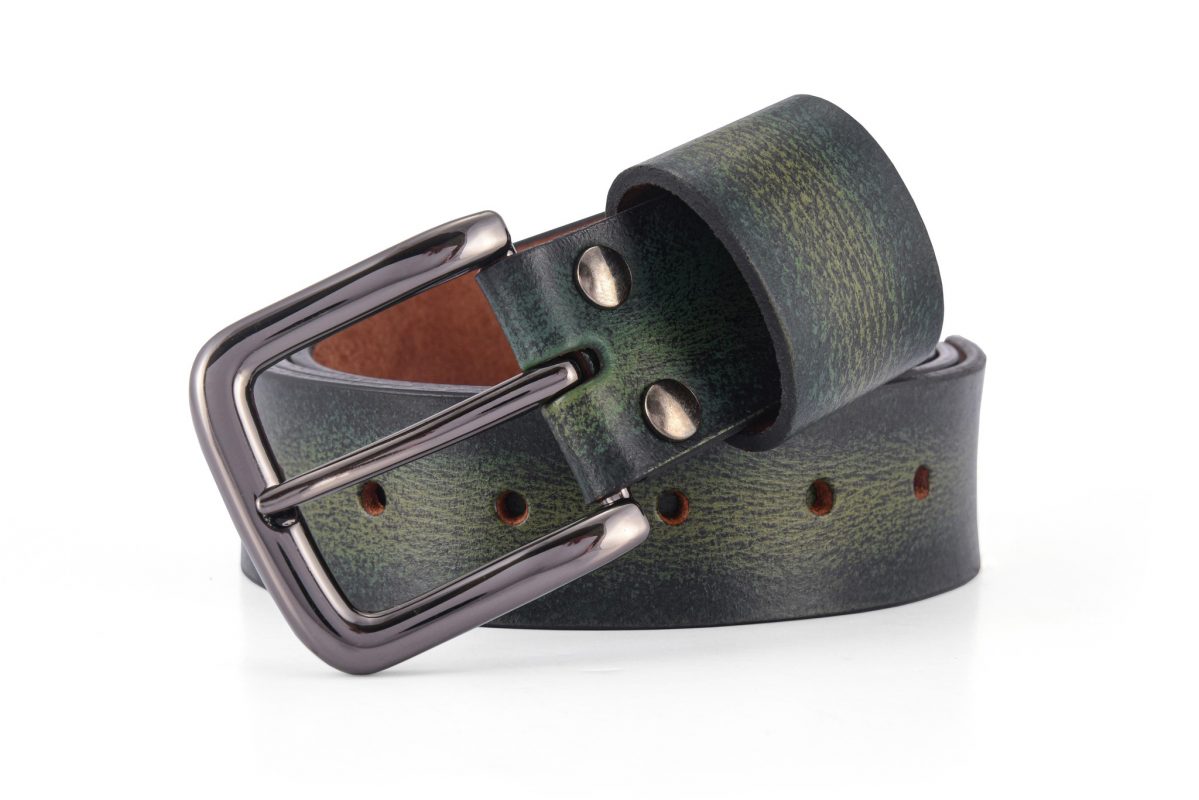
All Fair Impex leather belts use 100% full grain buffalo leather — single butt cut, meaning the leather is cut from a single piece rather than skived and laminated. The hides are semi-vegetable tanned using plant-based tannins and sourced as a by-product of the food industry.
How to Tell the Difference at a Glance
- Full grain: Natural surface variation — slight differences in texture, possible minor marks. The back (flesh side) will look like raw leather with visible fibres.
- Top grain: Very consistent surface pattern, slightly plasticky feel if you look closely. Often has a finish that repels water more obviously than genuine leather.
- Genuine leather: Heavy painted or sprayed finish on the surface. Edges are often raw or finished with a thin layer of glue. Lightweight for its thickness.
- Bonded leather: Often has a very uniform, almost rubbery feel. Edges are typically pressed or sealed. Price is the clearest indicator — if it is very cheap, it is probably bonded.
Which Should You Buy?
For a belt you plan to wear daily and keep for years, full grain leather is the only grade worth considering. It costs more upfront, but a well-made full grain leather belt will outlast three or four genuine leather belts — and it will look better over time, not worse.
If you want something inexpensive for occasional use or a specific costume or event, genuine leather or top grain will serve the purpose without the investment of full grain.
For everyday wear, work, or western style — full grain, every time.
The Fair Impex leather belt collection is made entirely from full grain buffalo leather across five series: Maverick (pull-up), Frontier (bold colours), Picasso (artisan finish), Ranger (rugged milled), and Rodeo (western). Free custom engraving and free US shipping on every order.
